
Baker County Arrest Log Sources
Baker County publishes no single seven-day or 30-day arrest database. The multi-day source is the CAD Press Log Archives, which posts a separate PDF for each day. The visible list reaches back roughly a month. Depth can shift without notice. Read every document as its own dated source.
The archive is broader than a booking blotter. Sheriff, Baker City Police, and Oregon State Police-Baker entries sit beside ambulance, fire, and other public-safety calls. Rural communities share the same pages. A warrant or arrest event may appear next to a welfare check, a medical response, or routine service work.
Read Baker County Blotter Dates
Work backward one PDF at a time. Continuity across dates matters here, especially weekends. The Arrests Last 24 Hours page takes a different approach, tracking the current rolling file for immediate confirmation. Every entry needs the agency and event type the document itself names. Careful attribution keeps the Baker County record straight.
- Open the archive index and choose a defined date range instead of assuming the visible list is permanent.
- Open each daily PDF and record its displayed date or range before extracting any arrest-related event.
- Filter by event Type, agency or Officer, and narrative. Do not search only for the word arrest.
- Keep Call and Incident references with the source date, but do not relabel them as booking or court numbers.
- Verify present custody with the JusticeConnect Baker roster and later outcomes through court records.
A person can appear in a narrative without ever being booked into Baker County Jail. Another may be booked and released the same day. The two records overlap only partly; neither substitutes for the other.
Baker Arrest Log Fields
The CAD format stays consistent. Its columns name each event, its place, and the responding side of the public-safety system. The log stops short of a full jail record.
| Field | How to interpret it |
|---|---|
| Call | A dispatch reference, not a jail booking number. |
| Incident | A CAD incident identifier, distinct from a court case number. |
| Type | The event category; many types are unrelated to arrest. |
| Date/Time | When the logged event occurred, which may differ from booking time. |
| Location | The reported place, useful for distinguishing Baker City from rural county events. |
| Officer | The listed responder or agency context, not necessarily the final arresting agency. |
No booking number appears. Bond, scheduled release, and mugshot fields are absent too. A narrative can still mention a warrant arrest or a detainer, which marks the line as custody-related rather than a routine call.
Separate Arrests From Dispatch Calls
Agency and event type beat a single keyword. A Baker City Police entry usually marks a city event. Sheriff entries can arise in Haines, Huntington, another community, or unincorporated parts of Baker County. Oregon State Police-Baker appears too. The shared format tracks countywide operations. It is not one agency's arrest ledger.
One PDF often mixes law enforcement work with fire and medical calls. That breadth helps build a chronology. But it creates a real labeling risk. Treat a row as arrest-related only when its own words support that reading. A plain call is not an arrest. The Baker City police reports and statistics page marks one more divide.
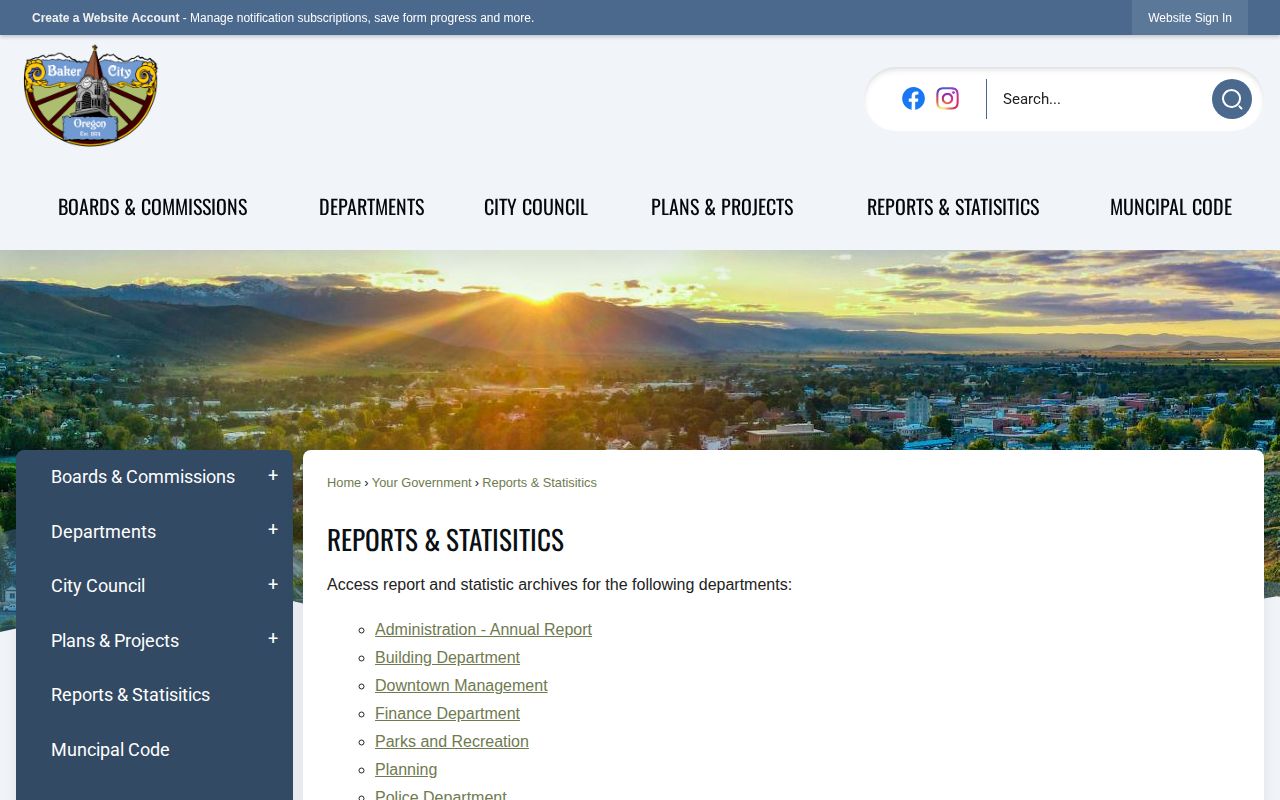
It shows aggregate reports, not named Baker County arrests.
Weekend Baker Arrest Review
Weekends show up as separate dated entries. A Monday review should open each relevant PDF rather than hunt for one weekend summary. The files are generated in the early morning, which can split events across documents in odd ways. No holiday publication guarantee exists. A missing date does not mean nothing happened.
Downtime or archive changes can explain a gap. The right fallback is a records request to Baker County Sheriff Records. Specify the date and the record type you need. Ask whether the item is a press-log PDF, an underlying CAD event, call audio, or an incident report.
Baker Arrest News Context
News outlets fill in what a jail roster leaves out. The Baker City Herald, Elkhorn Media Group, and the Baker County Press each follow their own publishing pace. Each follows its own publishing pace. A story may name the arresting agency. It might quote the probable-cause affidavit, or track an arraignment as a Baker County case moves along. None of them posts a day-by-day arrest roster. So routine Baker County booking photos stay scarce in their pages. The Baker City Herald homepage lays out the local-news sections a reader can browse.
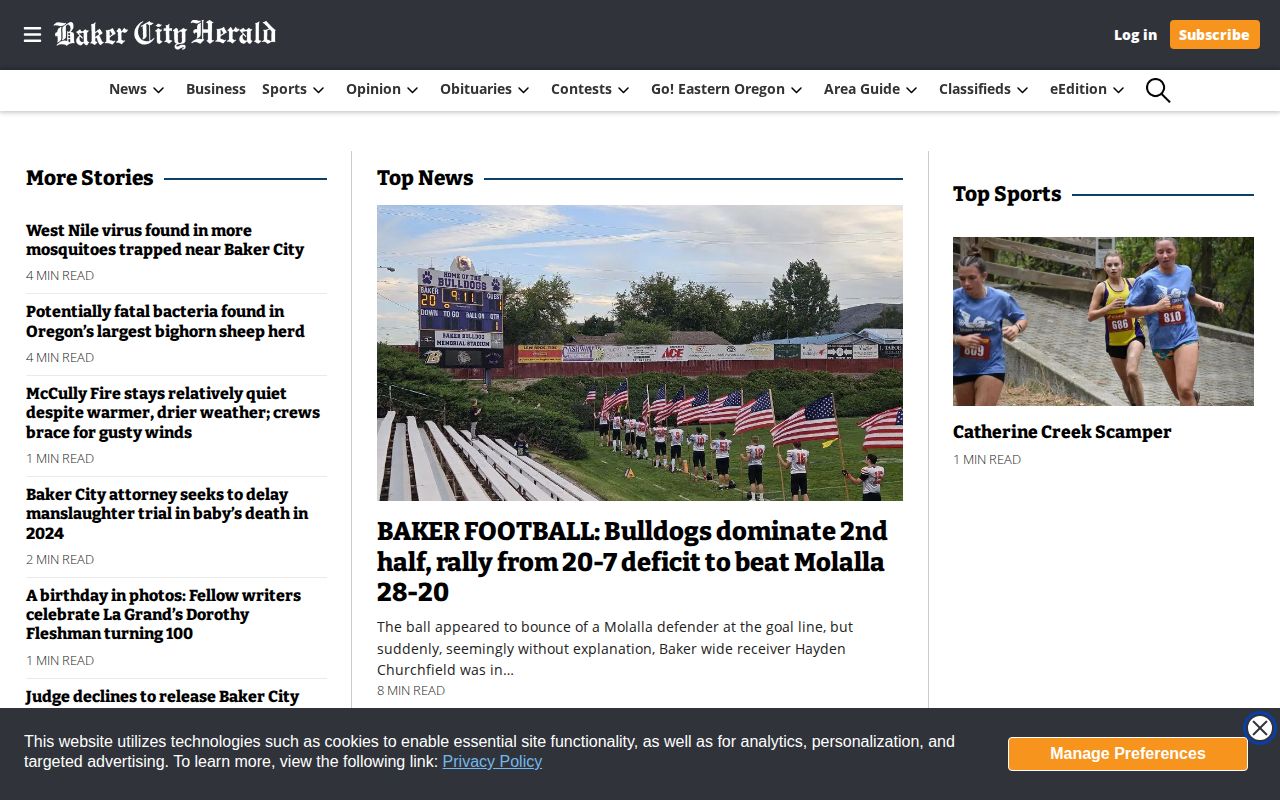
News coverage is a path to context, not an official register. Check the CAD log and custody records first. Then let journalism fill in the story. A well-reported piece can trace what the blotter only sketches.
Baker Blotter Archives and Retention
The online CAD index keeps rolling forward. Old daily files can slip out of view. Baker County makes no forever promise about posted files. Oregon's retention schedule sets minimums. Homicide records stay on file for 20 years, felonies for 10, and misdemeanors for 5. Those periods govern the underlying record series, not the life of a public PDF or vendor roster page.
Want older Baker County material? Ask the sheriff first, with a precise date, agency, record type, and any known identifier. Sometimes a custodian will say a historic record transferred elsewhere. At that point the Baker County Records Inventory and the State Archives take over. The inventory alone does not prove that. A current booking image or CAD file may never have moved there. Newspapers offer one more route. The University of Oregon historic Baker City Herald archive preserves decades of reporting on Baker County arrests.
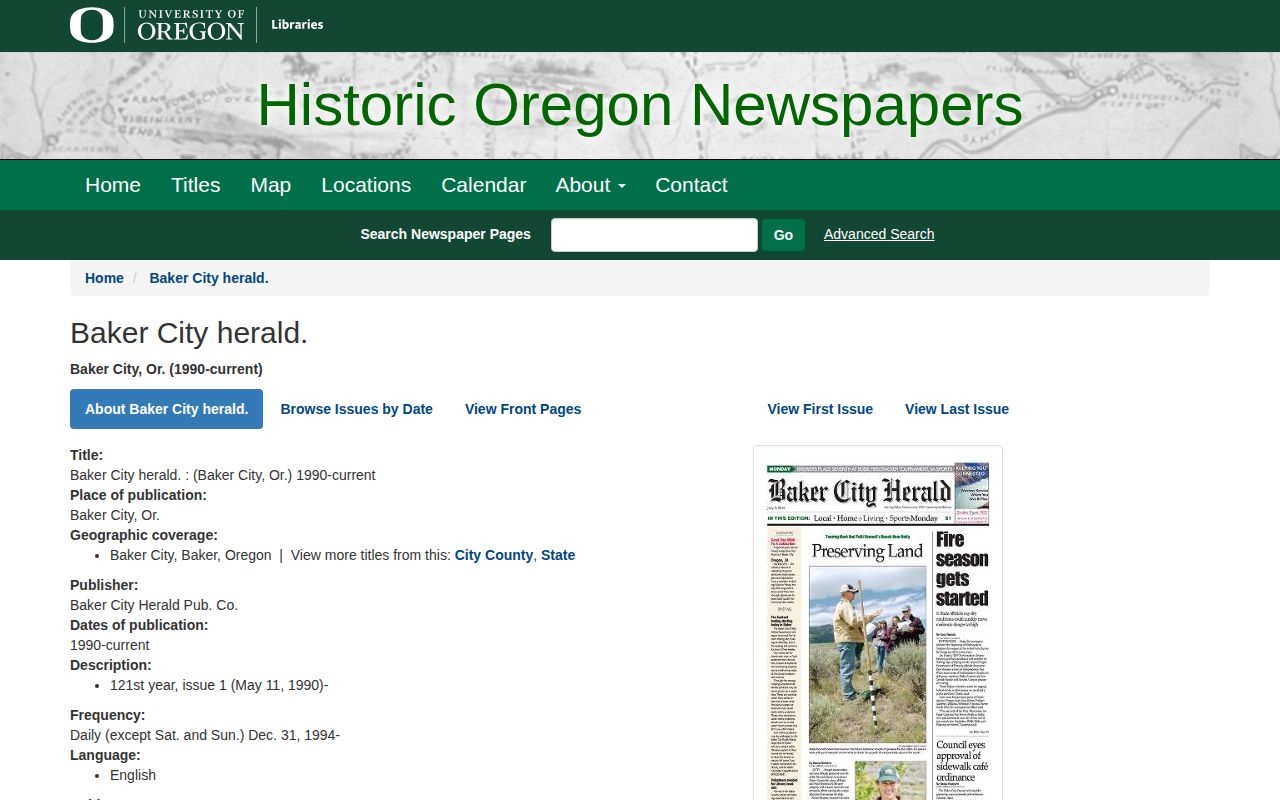
Old newspapers are one thread, not the whole fabric. For a modern court result, use the Baker Circuit Court records page. Public access there can exclude sealed, confidential, juvenile, and other restricted matters.
Records requests work best with specifics. Name the date range, the agency, and the location. Say whether you want the press log, CAD data, call audio, or an incident report. If a booking is the real subject, state that plainly and include the booking number when known. The sheriff's form treats jail records, call logs, reports, and photographs as separate categories, which is one more reason a blotter entry is never a complete arrest file.
Historical newspaper search serves a different purpose. It locates public reporting and adds social context around a Baker County arrest. Current agency and court records still control questions about custody and warrants.
Old Baker County jail lists used their own shorthand. BJC stood for Baker Justice Court. BCC meant Baker Circuit Court. Those codes help decode an archived blotter entry. They are not current court case numbers. Match the old reference to the right court system before seeking a case outcome.